
Cameroon

APIFED
Located in Djoum, Cameroon, APIFED (Appui à l’autopromotion et l’insertion des femmes, des jeunes et des désœuvrés) are a small local organisation but with a brave and committed team. APIFED have fiercely contested land grabs and the displacement of local Baka populations by a rubber plantation, as well as supporting them in denouncing poachers and … Read more

APED
AIDESEP (Asociación Interétnica de Desarrollo de la Selva Peruana) represents the indigenous peoples of the Peruvian Amazon, working for the defense and respect of their collective rights. AIDESEP works to expose indigenous people’s struggles and present alternative development proposals according to their worldview and culture. News Sorry there are currently no news items for this … Read more
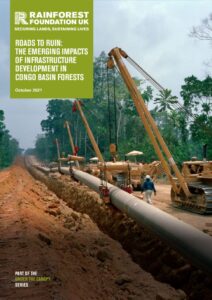
Roads to Ruin: The Emerging Impacts of Infrastructure Development in Congo Basin forests
A report by RFUK reveals the growing extent, and impact, of transport and energy infrastructure development in the Congo Basin – which is on its way to becoming a major driver of deforestation in the world’s second largest rainforest. The eight case studies featured in this report show that, while certain projects may bring some … Read more

AJESH
AJESH (Ajemalibu Self Help) is a civil society organisation founded on June 4, 2006. AJESH are located in Nyasoso, Cameroon and work with local and indigenous communities in the South West region. RFUK’s partnership with AJESH began in 2014 and together we have worked on issues including: participatory mapping, land and resource rights of forest … Read more

First-ever Baka chief officially recognised in southern Cameroon—his majesty Martin Abila of the village Assok
For the first time in Southern Cameroon, an Indigenous Baka village has been officially recognised and their chief formally installed by the Cameroonian state. This marks a significant milestone in a country where Indigenous Peoples face extreme social, political and economic marginalisation. The installation of his Majesty Martin Abila as official chief of the village … Read more

Final Evaluation: Embedding Community Real Time Monitoring (RTM) to Sustain Livelihoods and Forests in West and Central Africa
An external evaluation of the ‘Embedding community Real Time Monitoring (RTM) to sustain livelihoods and forests in West and Central Africa’ project took place between October 2020 and January 2021. This project, funded by the UK government, seeks to improve forest governance in Cameroon, Ghana, DRC and Republic of Congo by strengthening of forest communities’ … Read more
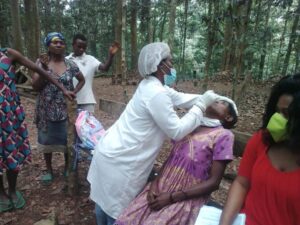
Taking on the Coronavirus in the Forests of Southern Cameroon
APIFED’s team equipped with soap, buckets with taps, disinfectant gel, masks, and posters in the local languages Baka and Bulu to distribute to communities 2020 forced humanity to recognise our global kinship as people all over the world faced the same threat at the same time. Every society witnessed how the most vulnerable communities were … Read more

Mapping the Future: Towards Meaningful Participation of Forest Peoples in Land-use Planning in DRC and Cameroon
This RFUK report charts way to better inclusion of forest communities in Congo Basin land use planning processes.
Securing Customary Rights is Key to Sustainable Community Forestry
The laws in the Republic of Congo and the Central African Republic provide limited protection to indigenous peoples and local communities regarding access to land and forest resources. Often, logging concessions overlap their territories, restricting access to lands and resources. However, the development of community forests is gaining momentum in the region. These can help … Read more
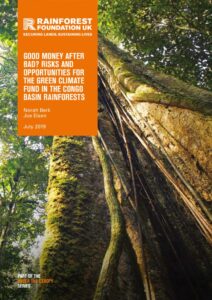
The Green Climate Fund in the Congo Basin Rainforests – Good Money After Bad?
A report published by the Rainforest Foundation UK (RFUK) on the Green Climate Fund finds that one of the world’s largest climate adaptation and mitigation funds for developing countries may actually do more harm to tropical forests and people on the frontline of climate change unless it is reformed.